In a federal courtroom in Phoenix in February 2026, U.S. District Judge Roslyn Silver issued a 128-page order seizing control of Arizona's prison healthcare system. After 14 years of litigation. After two contempt-of-court findings. After more than $2.5 million in fines the state paid rather than fix the problems. The judge wrote that the Arizona Department of Corrections, Rehabilitation and Reentry posed an "intolerable grave and immediate threat of continuing harm" to the people in its custody.
Court-appointed monitors had found that roughly 97% of critical referrals to outside medical specialists were delayed or never happened. People with advanced cancer were misdiagnosed with depression. People with seizure disorders had their medication stopped without medical review. They died.
Seven months before that ruling, Governor Katie Hobbs had signed Senate Bill 1507 into law — a bill that created the state's first-ever Independent Correctional Oversight Office, designed to catch exactly these kinds of failures before they become body counts. The bill passed with broad bipartisan support: 46-10 in the House, 23-5 in the Senate. It was, by any measure, a landmark.
There was one problem. The legislature stripped the $1.5 million the office needed to open its doors. As of mid-2026, Arizona's oversight office exists only on paper.
This is the story of a law that could change how Arizona runs its prisons — if the state decides to let it.
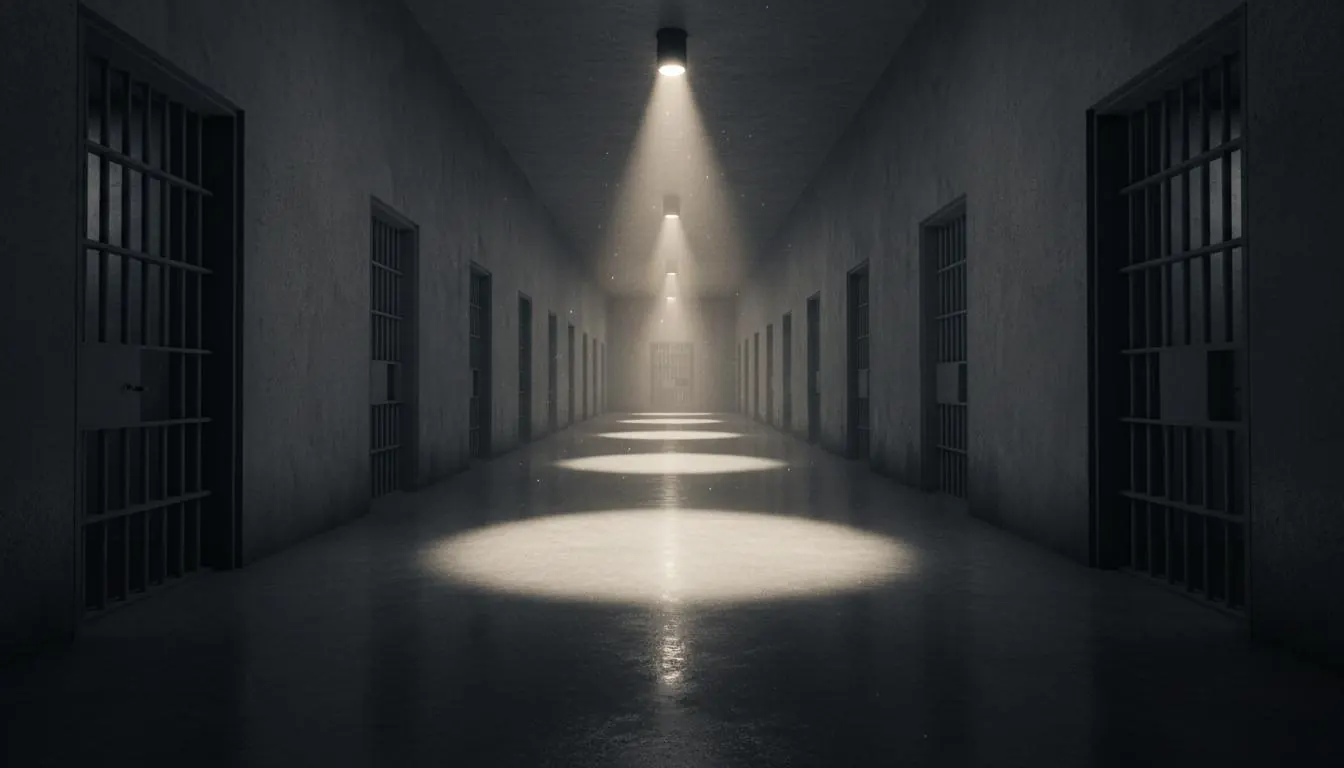
How We Got Here: A Decade of Crisis
Arizona did not arrive at federal receivership overnight. The path was long, well-documented, and marked by repeated warnings that went unheeded.
The state's prison population has grown by 1,444% since 1970. Today, the ADCRR holds approximately 35,500 people across ten state-run prison complexes, at an annual cost exceeding $1.5 billion. Despite that spending, Arizona's three-year recidivism rate sits at 29%, and the Governor's own 2025 executive order acknowledged that 93.2% of incarcerated people will eventually return to their communities. The system is expensive. It is not working.
The failures inside the walls have been staggering. The class-action lawsuit now known as Jensen v. Thornell has produced years of evidence showing what federal experts called "barbaric" medical neglect. Complex medical care was routinely delegated to nurses working beyond their scope of practice. Mental healthcare was described by the court as "wholly inadequate," contributing to a persistently high suicide rate.
In 2020, a whistleblower at the Lewis Prison Complex revealed that hundreds of cell doors were broken — they could be forced open by hand — creating a security crisis that endangered the lives of both incarcerated people and staff. That same year, the department's handling of COVID-19 inside its facilities drew public outcry. In 2023, the U.S. Department of Justice concluded a separate investigation finding that ADCRR systematically violated the Americans with Disabilities Act.
Through all of this, Arizona lacked any independent state body with the authority to walk into a prison, investigate a complaint, and tell the public what it found. The state's Ombudsman — the office created specifically to investigate citizen complaints against government agencies — was, by statute, prohibited from looking into complaints from people in state prison custody. That is not a gap in the system. That is the system working as it was designed: to keep prison conditions invisible.
What SB 1507 Actually Does
Senate Bill 1507, signed into law on July 1, 2025, creates the Independent Correctional Oversight Office, or ICOO. It is housed as a standalone entity — not inside the corrections department, not as a subunit of another agency. The law gives it real structural independence and a set of powers that, on paper, rank among the strongest in the country.
A Director With Real Independence
The Governor appoints the ICOO Director, subject to Senate confirmation, for a five-year term. The Director cannot have worked for, or had a financial interest in, the ADCRR for five years before appointment. They cannot be a registered lobbyist. And the Director can only be removed for specific cause — neglect of duty, misconduct, or inability to perform — by the Governor or a two-thirds vote of both legislative chambers. This is a protected position designed to insulate oversight from political pressure.
The Power to Go Anywhere and See Anything
The ICOO has what oversight experts call "golden key" access. The law grants the office unfettered access to every ADCRR facility, every program, and every record. No prior notice required. No permission needed from the warden.
A Complaint System for People Who Have None
The law requires the ICOO to set up a secure telephone hotline and online forms so that incarcerated people, their families, and ADCRR staff can report problems. This matters because, until now, the only formal complaint mechanism available to incarcerated Arizonans was the department's own internal grievance process — asking the agency to investigate itself.
Investigative Authority and Subpoena Power
The ICOO can initiate investigations on its own or in response to complaints. It can investigate abuse, neglect, conditions, and policy violations. When the department does not cooperate, the office can issue subpoenas to compel documents. ADCRR must respond to document requests within 20 business days, or within five days for urgent cases involving death, threats of harm, or denial of medical care.
Mandatory Inspections and Public Reporting
Every state correctional facility must be inspected at least once every two years. By December 31 of each year, the ICOO must publish a detailed report covering its activities, complaints received, and results of investigations. The law specifies the categories of data the ADCRR must provide for this report: deaths in custody broken down by cause, including suicide and overdose; assaults and use-of-force incidents; staffing metrics including turnover and vacancy rates; use of restrictive housing; medical and mental health data; facility lockdowns; and grievance outcomes.
Protections for Those Who Speak Up
Communications with the ICOO are privileged and confidential. Records the office maintains are exempt from public records requests. The Director and staff receive civil immunity for their official actions, except in cases of gross negligence or intentional wrongdoing. These protections exist to ensure that incarcerated people, families, and correctional staff can report problems without fear of retaliation.
"Before SB 1507, Arizona law explicitly barred its own Ombudsman from investigating complaints filed by people in state prisons."
What SB 1507 Does Not Do
Understanding what the law does not do is just as important as understanding what it does.
It does not fund the office. The original bill included a $1.5 million appropriation from the state General Fund. A House floor amendment stripped that funding. The final law creates a "Correctional Oversight Fund" that can receive legislative appropriations, federal money, and private grants — but no actual dollars were deposited into it.
It does not give the ICOO enforcement power. The office can investigate, report, and recommend. It cannot order the ADCRR to do anything. It cannot impose sanctions, fire staff, or directly change policy. Its power lies in transparency — making problems visible to the public, the legislature, the courts, and the media.
It does not replace federal court oversight. The federal receivership over prison healthcare operates independently. A functioning ICOO could work alongside federal oversight, but SB 1507 does not substitute for court-ordered reforms.
It does not appoint a director or hire staff. Without funding, the Governor cannot appoint a Director, no staff can be hired, no hotline can be established, and no inspections can occur. Senator Shawnna Bolick, the bill's Republican sponsor, characterized the outcome as creating a "press release" rather than a functional oversight body.
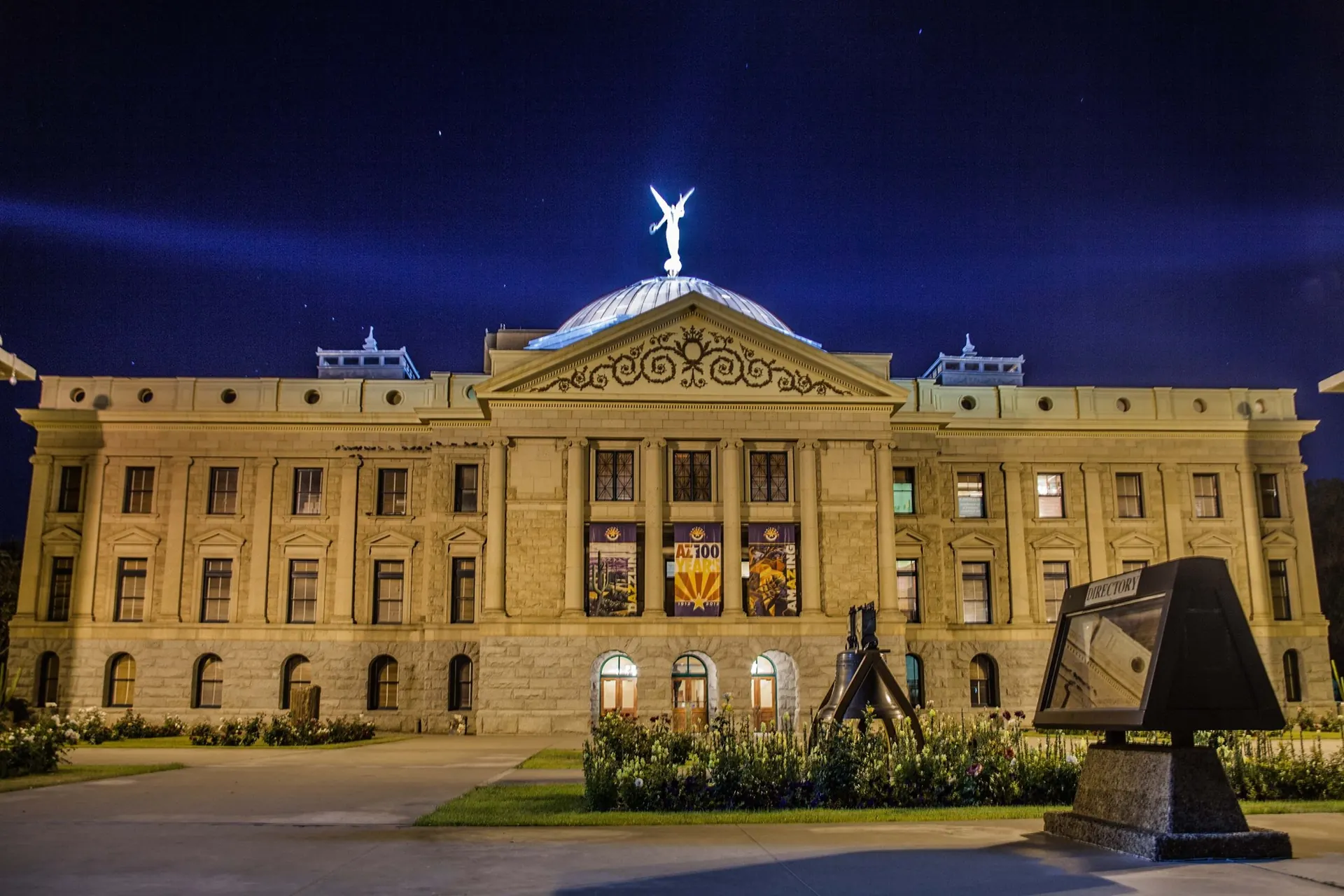
The Funding Fight: $1.5 Million the State Won't Spend
SB 1507 moved through the legislature with unusual speed and near-unanimous support. It passed the Senate Regulatory Affairs and Government Efficiency Committee 7-0. It passed the Senate Appropriations Committee 9-1. It passed the full Senate 23-5. It passed the House Government Committee 7-0. It passed the full House 46-10. At each stage, the bill included its $1.5 million appropriation.
Then, during final budget negotiations — the closed-door process where legislative leaders and the Governor's office decide what actually gets funded — the money disappeared. A House floor amendment by Representative Walt Blackman restructured the funding mechanism, replacing the direct appropriation with an empty fund that could theoretically receive money later.
The result is a law that authorizes everything and funds nothing. To put the number in perspective: $1.5 million is roughly one-tenth of one percent of ADCRR's annual operating budget of more than $1.5 billion. The oversight office that could help prevent the kind of failures that led to a federal takeover of prison healthcare would cost less than what the state spends on many individual line items within the corrections budget.
In 2026, supporters tried again. Senator Bolick introduced SB 1032, and a companion bill, HB 2063, was introduced in the House. Both passed their respective chambers unanimously. Neither was included in the final state budget. The pattern is consistent: rank-and-file lawmakers support the office. The people who control the budget do not prioritize it.
What Meaningful Oversight Actually Requires
Not all oversight is created equal. A weak or poorly designed office can provide the appearance of accountability without the substance — what scholars sometimes call "oversight theater." The National Resource Center for Correctional Oversight has identified core attributes: structural independence, unfettered facility access, adequate and stable funding, subpoena power, public reporting obligations, and protection from retaliation. SB 1507 meets every standard — except funding.
As of 2024, approximately 19 states and the District of Columbia have some form of independent prison oversight. Minnesota has operated its Office of the Ombuds for Corrections since 1973. Virginia established a layered model in 2023-2024. Maryland launched its Office of the Correctional Ombudsman in 2024. Arizona's ICOO, on paper, compares favorably to all of these models. But Minnesota's office is funded. Virginia's is funded. Maryland's is funded. Arizona's is not.

Who Built This: The Praxis Initiative and the Coalition Behind SB 1507
The law did not write itself. Its passage was the result of years of sustained advocacy, led in large part by people who had lived inside the system they were trying to reform. The Praxis Initiative, a Phoenix-based nonprofit, was founded by formerly incarcerated individuals and has been the organizational backbone of Arizona's correctional oversight movement since 2018. Executive Director John Fabricius served 15 years across nine different Arizona prison complexes. Policy Director Jessica Johnson spent eight years at the Perryville women's complex.
The bipartisan coalition that carried SB 1507 included Republican Senator Shawnna Bolick, Republican Representative Walt Blackman, and allies across the aisle. Governor Hobbs's 2023 Independent Prison Oversight Commission — a temporary, volunteer body — concluded in its final report that only a permanent, professionally staffed office could provide real oversight. That recommendation became the direct catalyst for SB 1507.
"The $1.5 million needed to stand up the oversight office is roughly one-tenth of one percent of ADCRR's $1.5 billion annual budget. Arizona spends more on prison landscaping contracts."
The Counterargument — and Why It Doesn't Hold Up
"The department can police itself." Fourteen years of federal litigation, two contempt findings, millions in fines, and a receivership order say otherwise.
"It costs too much." The $1.5 million price tag is 0.1% of ADCRR's annual budget. The cost of not having oversight includes federal litigation that has consumed state resources for over a decade.
"Federal oversight already exists." The receivership covers healthcare. It does not cover staffing, use of force, conditions of confinement, restrictive housing, programming, or grievance handling. Federal court oversight is reactive, adversarial, and expensive. State-level oversight is proactive.
What This Means for Arizona Communities
Ninety-three percent of the people currently held in ADCRR facilities will return to Arizona communities. The conditions they experience during incarceration — whether they receive adequate medical care, mental health treatment, educational programming, and preparation for reentry — directly affect what happens when they come home.
Families of incarcerated people bear an enormous burden. Without an independent complaint mechanism, a mother who learns her son is being denied medication has no state office to call. Correctional staff also have a stake in functional oversight — chronic understaffing means officers work in conditions that are dangerous and unsustainable.
And for every Arizona taxpayer, the fiscal math is straightforward. The state is spending more than $1.5 billion a year on a system that a federal judge has declared unconstitutionally broken. A $1.5 million investment in proactive oversight is not an expense. It is the least costly option on the table.
What Happens Next
The immediate path forward runs through the Arizona State Legislature. Advocates and their legislative allies will push again for an appropriation in the 2027 session. The question is whether budget negotiators will treat oversight as a priority or continue to treat it as expendable.
The federal receivership itself is a powerful argument. Every month the receivership operates, it demonstrates that when Arizona refuses to hold its own agencies accountable, the federal government will do it instead — at greater cost and with less state control.
Public pressure matters. The detailed data reporting requirements in SB 1507 provide a ready-made framework for showing the public exactly what information the state is currently failing to collect and disclose. Advocates can point to those empty data categories and ask: don't you want to know these numbers?
What You Can Do
This law was built by ordinary people who refused to accept that a system this broken was beyond repair.
Take Action: Visit our Action Center to find your legislators and demand they fund the Independent Correctional Oversight Office. You can also support our work directly by making a donation.
Learn More: Read about our Independent Oversight initiatives or contact us to get involved.