"It is never too late to be what you might have been."
— George Eliot
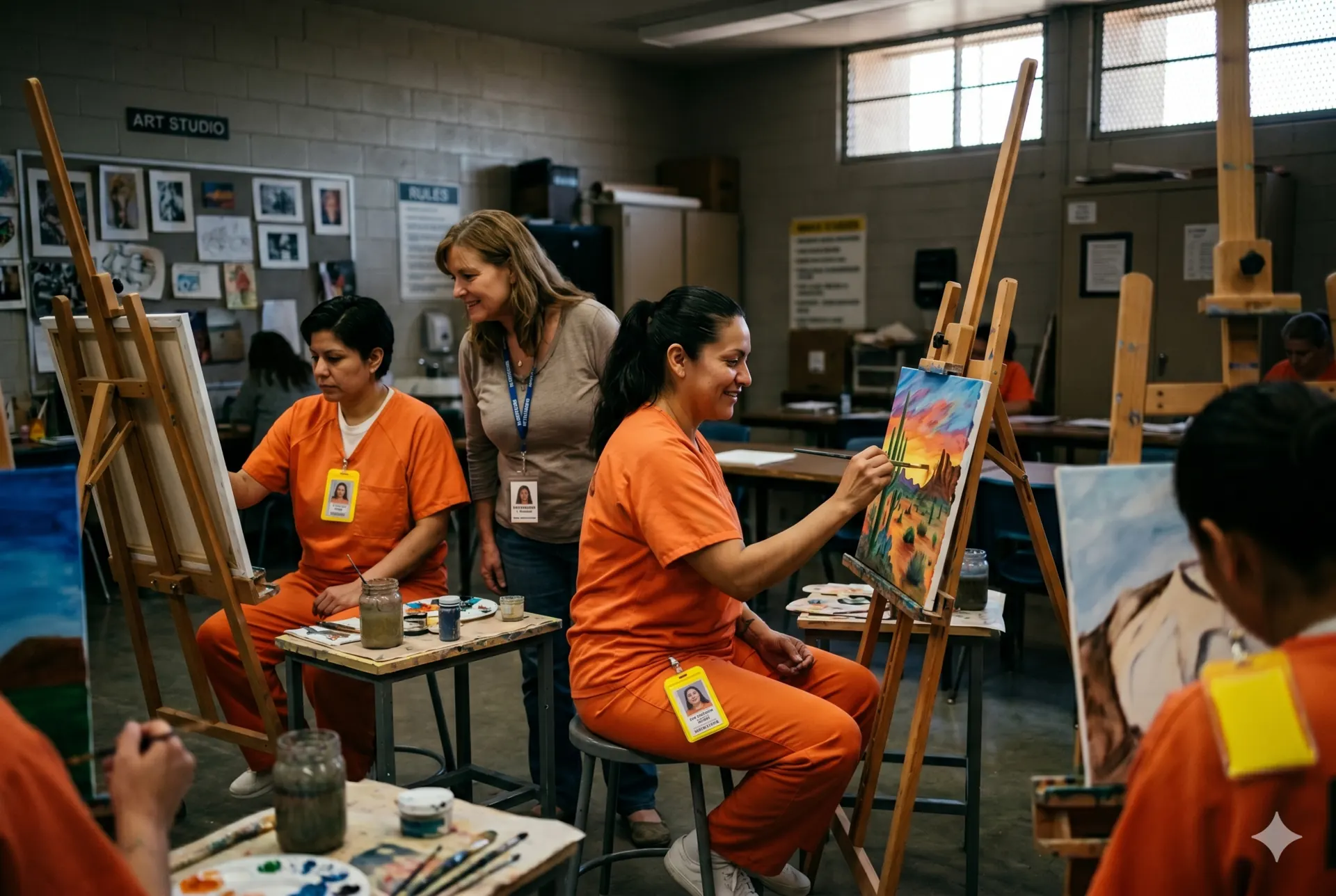
Why Arts Inside Matter
Decades of research show that arts programming in correctional facilities reduces violence, improves mental health, strengthens family connections, and reduces recidivism. Arts are not a luxury — they are a critical component of rehabilitation.
We support constructive, meaningful arts programming of many kinds inside correctional settings. Visual arts, music, writing, movement, theater, and other creative outlets consistently produce benefits in behavior, morale, learning, and rehabilitation. We want to support any serious program that expands human potential.
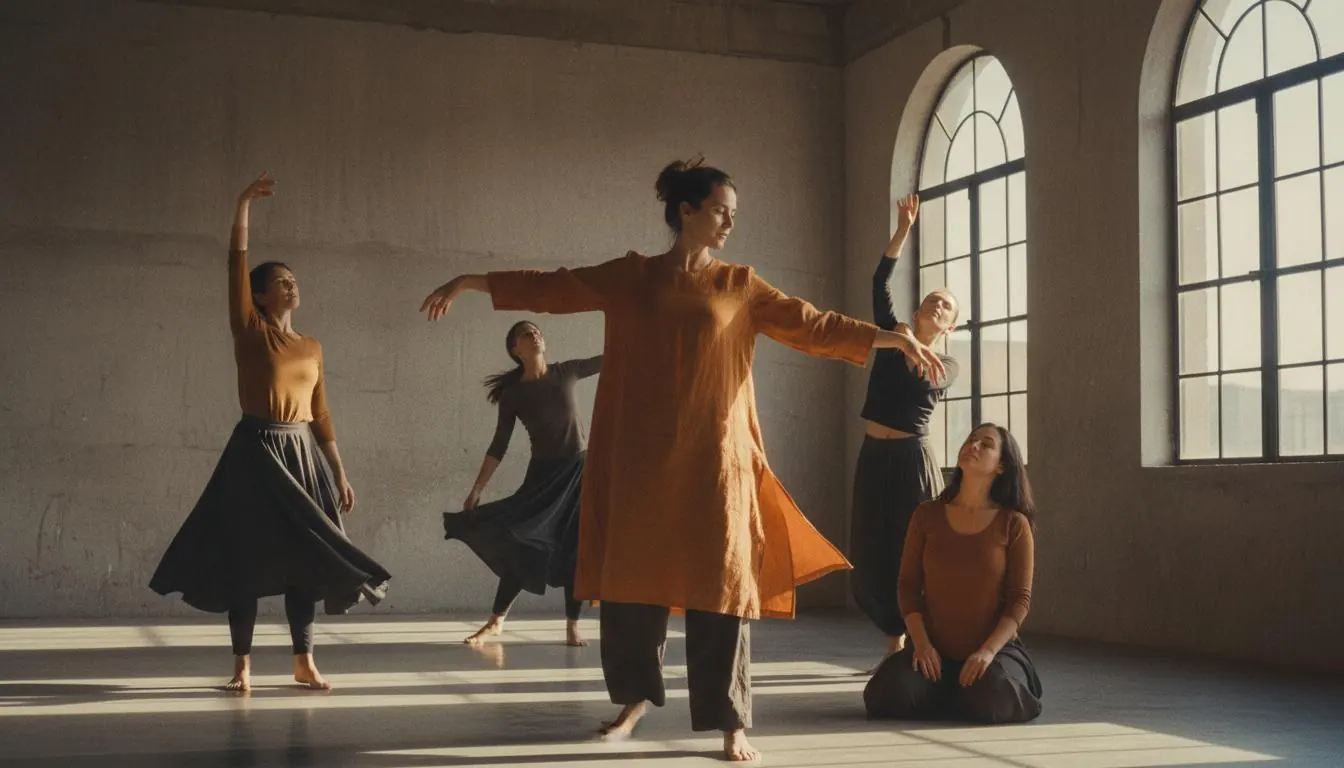
Think Motion
Think Motion is a flagship therapeutic movement and creative engagement program led by Dr. Susan Bendix. For the last three years, Dr. Bendix has successfully led this program at Perryville Prison, delivering kinetic movement, therapeutic arts, and creative engagement to incarcerated participants.
The program has been well received and has shown meaningful results in emotional regulation, stress management, and community building. Praxis Initiative proudly sponsors and partners on Think Motion and intends to continue supporting its expansion.
Music Theory Initiative
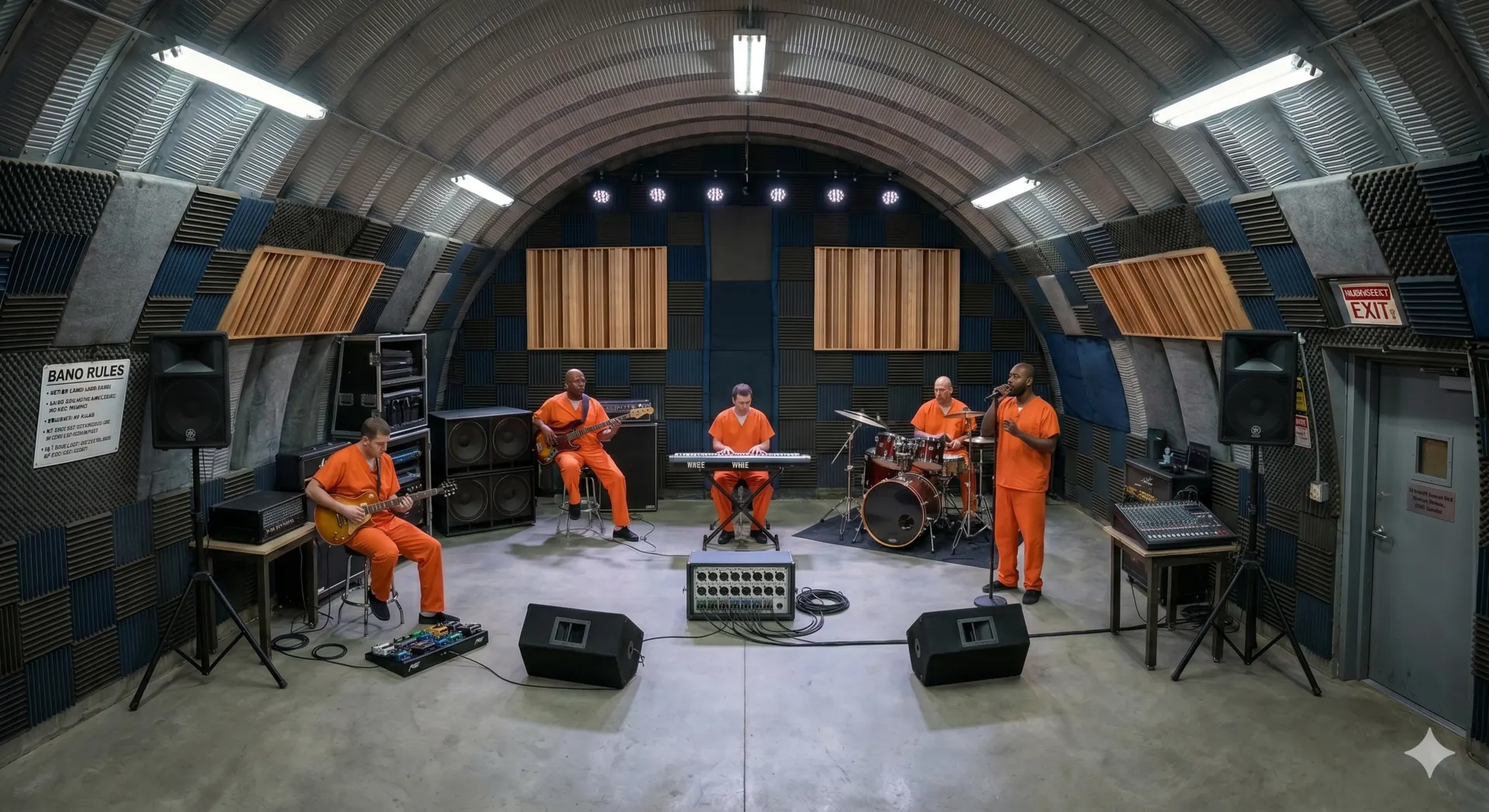
The Music Theory Initiative is modeled after the music theory program founded and taught by John Fabricius while incarcerated. The program helped participants develop discipline, confidence, communication, critical thinking, and real musical skill.
What made it especially powerful was that students eventually became teachers. A handful of committed learners mastered the material, then began teaching others in their housing units and communities — creating a multiplier effect where education spread peer-to-peer inside prison environments.
We are scaling this program through tablet-based learning modules, correspondence education, in-person workshops where possible, peer-led teaching models, and structured creative development tracks. This is not just music education. It is leadership development, emotional growth, discipline, communication, mentorship, and skill-building delivered through art.
Broader Arts in Prison Support
We support constructive, meaningful arts programming of many kinds inside correctional settings. Visual arts, music, writing, movement, theater, and other creative outlets consistently produce benefits in behavior, morale, learning, and rehabilitation. We want to support any serious program that expands human potential — because creativity is part of rehabilitation, and everyone deserves access to the tools that help them grow.
Program Outcomes
Emotional Regulation
Creative expression provides healthy outlets for processing complex emotions.
Positive Identity
Arts programming helps individuals develop identity beyond their incarceration.
Community Connection
Collaborative art builds relationships and reduces isolation.
Hope and Discipline
Dedicated practice instills discipline and cultivates hope for the future.