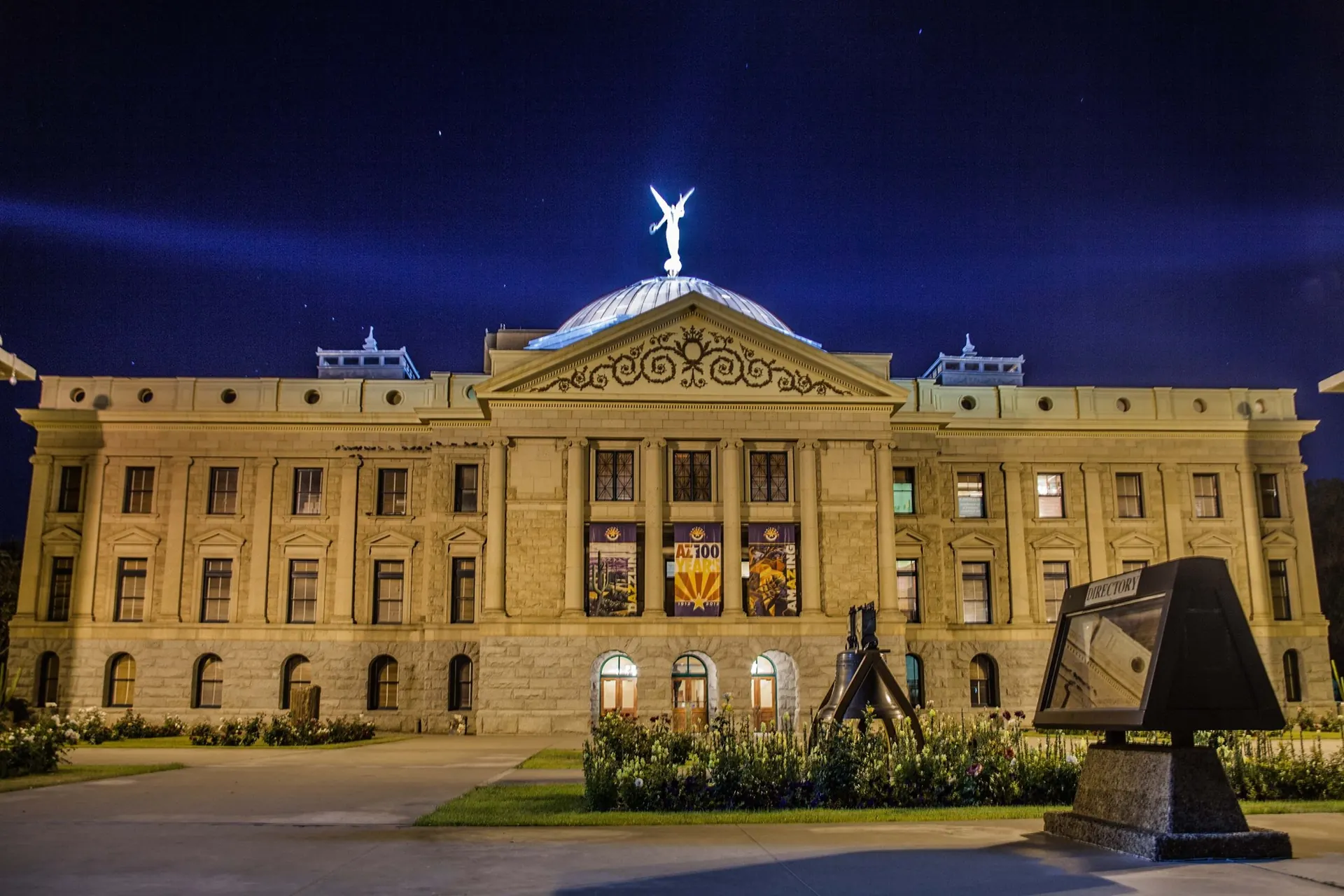
Prisons are closed institutions. The public pays for them. The Constitution governs them. Yet most people, including lawmakers, rarely see what happens inside. We inspect restaurant kitchens because diners cannot see the freezer, the sink, or the cutting board. Arizona locks more than 35,000 people in state or contracted prisons, spread across 16 facilities, including seven run by private operators, with far less routine public inspection than most industries receive. Independent oversight exists to close that gap. It brings facts into public view, spots danger early, lowers avoidable costs, and gives prison leaders, legislators, families, and people who are incarcerated a way to surface problems before those problems harden into death, injury, scandal, or years of federal litigation.
Why oversight matters
Transparency is not a public relations project. It is a public safety function. When prisons operate in darkness, harm spreads. Staff work in unsafe places. Families lose contact and trust. Medical neglect goes unseen. Violence gets normalized. Lawmakers end up voting on billion-dollar systems with less real-time information than a county health inspector gets from a surprise visit to a diner. The American Bar Association has urged every level of government to make correctional institutions more transparent and accountable and to create public entities independent of corrections agencies to monitor and report publicly on conditions. Michele Deitch and other oversight scholars have made the same point for years, with special force in Arizona.
Oversight also saves money. Arizona lawmakers and advocates have argued for years that prison failures drive legal fees, fines, emergency spending, and crisis management costs. Justice Action Network said in 2025 that Arizona had already spent tens of millions of dollars on legal fees tied to federal prison litigation. Independent oversight does not end every lawsuit, and it does not replace management. Still, it helps agencies catch weaknesses early, before judges, monitors, or the press expose them under far worse conditions.
Arizona offers a plain example. Public reporting in 2019 described broken locks at the Lewis prison complex and state findings later criticized the Department’s slow response. Deitch’s Arizona oversight analysis, drawing on reporting from that period, states that broken cell doors led to serious assaults against staff and people who were incarcerated, including two deaths. The lesson was larger than one complex. When nobody outside the chain of command has routine access, long-running danger stays hidden until it explodes.
Oversight matters for constitutional compliance as well. Arizona’s prison system has faced long-running federal court intervention over health care, mental health care, and isolation conditions. Court-appointed monitors in Jensen v. Thornell note a permanent injunction entered on April 7, 2023, to address unconstitutional health care and living conditions in maximum custody, detention, or watch. The ACLU’s case summary likewise says the federal court ordered substantial changes so care would meet constitutional standards. Courts matter, but courts are reactive, slow, expensive, and narrow. They address claims after harm has already occurred. Oversight adds something courts do not provide, which is regular, preventive presence.
You should think of oversight the same way you think of maintenance on a fleet vehicle. If you wait for smoke, you already lost money. If you inspect early, document wear, and fix small failures fast, the engine lasts longer and fewer people end up stranded on the side of the road. Prison oversight works the same way. Good oversight gives the public early warning. It gives agency leaders a factual map of weak points. It gives legislators a basis for targeted fixes instead of panic responses.
What effective oversight looks like
An oversight office fails when it looks independent on paper but depends on the prison agency for access, staff, money, or permission to speak. The American Bar Association’s 2008 resolution says the monitoring entity should be independent of any correctional agency and should report publicly on conditions. Deitch’s Arizona analysis sharpens the point. She argues for what many practitioners call “golden-key access,” meaning real entry to facilities, records, staff, and people who are incarcerated, without a gatekeeper slowing the work.
In practice, six elements separate serious oversight from symbolic oversight.
First, independence. Arizona’s 2025 law builds part of this foundation. It creates an Independent Correctional Oversight Office, gives the director a five-year term, and limits removal to neglect of duty, misconduct, or inability to perform duties. It also bars appointment of people with recent financial ties to the Department of Corrections. Those are strong starting protections because they reduce direct agency influence over the watchdog.
Second, unfettered access. Arizona’s statute gives the office access, in person and with or without prior notice, to all facilities, all areas used by people who are incarcerated, and staff, contractors, and other people for interviews. It also gives the office access to copy relevant records and sets deadlines of 20 business days for ordinary requests and five days for urgent matters involving death, threats of bodily harm, assault, or denial of needed medical treatment. Washington’s statute goes even further in some respects by expressly authorizing private and confidential communication, photography, and video recording during inspections.
Third, protected communication. If people fear retaliation, they stop reporting. Arizona’s law requires confidentiality rules and protects complainant identity to the greatest extent practicable. Washington’s law expressly protects confidential communications and includes a section on retaliatory actions. New Jersey’s office describes its own statute as protecting confidential communications and prohibiting retaliation for working with the office. Those features are not window dressing. They are the core of complaint-based oversight. Without them, the mailbox stays empty while the danger stays full.
Fourth, public reporting. Oversight has little value if findings die in a drawer. Arizona’s law requires an annual public-facing report with office budget and spending, numbers of complaints received and resolved, major investigations, deaths in custody, suicide attempts, hospital trips, and fatal and nonfatal overdoses. The American Bar Association standards strongly support this approach because public response and public reporting reduce the risk that inspection findings get ignored. HM Inspectorate of Prisons in England and Wales follows the same logic. It publishes reports, identifies priority concerns, and expects an action plan after publication.
Fifth, adequate funding and staffing. An office without staff is not oversight. It is a promise. Arizona’s office existed without any employees or budget appropriation as of October 2025, and local reporting in 2026 said the office still had no staff, office, or operating budget. By contrast, New Jersey’s Ombudsperson Office had a fiscal year 2025 budget of $2.806 million, with most of its budget dedicated to staff salaries, and detailed teams for field work, systemic monitoring, outside engagement, and call support. Washington’s office likewise operates under a statute built for full-time activity, not volunteer work.
Sixth, response without capture. Oversight offices need working relationships with wardens, line staff, health staff, and central office leaders. They also need distance. Regulatory capture is what happens when a watchdog starts seeing the system through the agency’s eyes, softens criticism to preserve access, and begins to protect the institution from scrutiny instead of protecting the public interest. Oversight offices should share draft factual sections for accuracy checks and hold regular meetings with prison leaders. They should not let prison leaders edit conclusions, choose inspection dates, block interview subjects, or dictate publication timing. Deitch warns against turning oversight into “supra-management,” and HMIP’s practice shows a better line. Inspectors report concerns publicly, then leaders respond through action plans.
The spectrum of oversight models
No single design fits every state. The best model depends on political culture, prison size, legal structure, and the level of public trust already in place. Still, most models fall on a spectrum.
The inspectorate model is built around routine, independent inspections. England and Wales offer the clearest example. HM Inspectorate of Prisons is an independent inspectorate led by the Chief Inspector of Prisons. It conducts mostly full, unannounced inspections, reports publicly, and expects action plans after publication. Inspections use observation, document review, and interviews with detainees, staff, and outside groups, including private and confidential conversations with people in custody. This model is strong when a state wants a disciplined inspection cycle, public scoring, and visible follow-through. It is less centered on resolving large volumes of individual complaints one by one.
The ombuds model combines complaint investigation with systemic monitoring. Washington’s Office of the Corrections Ombuds is a strong American example. State law gives the ombuds access to facilities, people, and records, private and confidential communication with people who are incarcerated, and short deadlines for urgent records tied to death, assault, or denial of medical care. The chapter also includes confidentiality rules and a provision on retaliatory actions. This model works well in states where families, legislators, and people inside need a place to bring concrete complaints while the office also studies patterns across facilities.
New Jersey also uses an ombuds model, with broader public-facing infrastructure than many states. The Office calls itself an independent set of eyes and ears for the public. It says its statute gives “golden-key access” to facilities, people, and records and prohibits retaliation for working with the office. In fiscal year 2025, it received more than 13,000 contacts from people who are incarcerated and their loved ones. In its 2024 annual report, the office said staff were on site in state prisons 995 times in one year, averaging roughly four staff members in prison each weekday. That mix of complaint intake, repeated field presence, inspection reports, and annual public reports makes New Jersey a useful model for states that want a high-contact office with visible public credibility.
Monitoring bodies sit somewhat differently on the spectrum. Pennsylvania’s Prison Society describes itself as the only independent oversight body with statutory access for Pennsylvania’s prisons and jails. It reports direct work inside all 85 state and county facilities through trained volunteers, case-by-case issue resolution, walkthroughs, and public reports. This model shows what long-term civic monitoring looks like when a state supports outside eyes with access but not always full state-office structure. It brings breadth and community involvement. It may have less coercive leverage than a statutory ombuds office housed within government, but it often reaches people and families who distrust state agencies.
Legislative oversight committees are another model. They hold hearings, request data, issue staff reports, and use budget power. They matter. But on their own, they often struggle with continuity. Members change. Session calendars are short. Committees rarely visit prisons often enough to build a real-time picture of conditions. Arizona’s 2023 Independent Prison Oversight Commission showed both the value and the limit of this approach. Governor Hobbs created it by executive order to inspect prisons, review records, and issue recommendations. Yet the National Resource Center for Correctional Oversight notes the commission had no budget and no staff. That made it useful as a bridge and weak as a lasting implementation model.
Hybrid models mix pieces from all of the above. Arizona’s 2025 law is a hybrid leaning toward an ombuds office with inspection duties. It requires complaint intake, data collection, biennial inspections of each correctional facility, quarterly stakeholder meetings, and annual reporting. Hybrids often work best in politically divided states because they let sponsors combine values that appeal across party lines. Conservatives see government accountability, staff safety, and cost control. Civil rights advocates see constitutional visibility, family access, and harm prevention. The design question is not which label sounds best. The design question is which powers will still matter after the next budget fight.
Arizona’s path from crisis to statute
Arizona did not wake up one morning and decide to create oversight. It got there through years of scandal, organizing, failed bills, public education, executive action, and bipartisan legislative work. Deitch’s Arizona paper, published in 2021, argued for permanent independent oversight and pointed lawmakers toward a model built from then-pending Arizona legislation and lessons from Washington and New Jersey. By January 2023, Governor Katie Hobbs created an Independent Prison Oversight Commission by executive order to improve transparency and accountability and to issue findings and recommendations. That commission marked progress, but it also proved the limit of temporary structures. It had no budget and no staff.
The durable win came in 2025. Justice Action Network said Arizona lawmakers overwhelmingly approved SB 1507 on June 27, 2025, after years of advocacy and broad bipartisan support. The law created an Independent Correctional Oversight Office in the executive branch with a governor-appointed director, cause-based removal protections, statutory access, complaint channels, inspection duties, and yearly reporting requirements.
The coalition mattered. Justice Action Network publicly credited work with Senator Shawnna Bolick, Representative Walt Blackman, Praxis Initiative, FAMM, and Dream.org. FAMM’s broader prison oversight work has also highlighted bipartisan backing from conservative and reform groups in other jurisdictions. Arizona’s public record shows a campaign built on cross-ideological language, with sponsors calling the bill a transparency, public safety, and government efficiency measure. That framing helped the bill travel across committee rooms where moral arguments alone would not have carried it.
Arizona’s next lesson is harder. Passing a bill is not the same as building an office. By late 2025, the National Resource Center for Correctional Oversight reported no budget appropriation and no employees for the new office. Arizona Capitol Times later reported that lawmakers introduced identical bills, HB 2063 and SB 1032, to provide $1.5 million for start-up costs, but funding still failed in the next budget cycle. Local reporting in 2026 described the office as existing on paper only. This is the warning other states should study closely. If you split authorizing language from operating money, the second fight often proves harder than the first.
Standing up an office and keeping it alive
The first year of implementation should focus on building a machine simple enough to work and strong enough to last. Start with staffing. At minimum, a serious statewide office needs a director, an investigations lead, an inspections or monitoring lead, an intake and data manager, administrative support, and at least one person dedicated to family communication and outside engagement. If the prison system faces major health care concerns, add clinical expertise early, whether through staff or contracted review. New Jersey’s structure offers a useful benchmark. Its office separates field work, systemic monitoring, outside engagement, and call support. Arizona’s statute already assigns all of those functions in substance, even if the office has not yet received funds to perform them.
Budgeting should match the model. A commission with light staffing will cost far less than a full ombuds office. Recent examples show the range. New Jersey’s Ombudsperson Office received $2.806 million for fiscal year 2025. Arizona lawmakers later proposed $1.5 million to launch their office. Hawaii’s correctional oversight commission profile listed a much smaller fiscal year 2025 budget of $462,134 for a different commission-style structure. Those numbers do not offer a universal formula, but they do show one truth. A statewide office with hotline intake, inspections, records review, data analysis, and public reporting needs dedicated personnel and recurring funds. It will not run on volunteer energy alone.
The first-year work plan should stay tight. Build the complaint system first. Arizona law already requires a secure telephone hotline and secure online complaint forms for department employees, contractors, people who are incarcerated, and family members. New Jersey’s experience shows why multi-channel access matters. Its office pairs phone lines with in-person meetings, on-site mailboxes, legal mail, and regular prison visits. Intake rules should sort complaints into three lanes on day one: urgent safety and medical issues, individual complaints needing quick fixes, and systemic matters pointing to patterns.
Then establish inspection protocols. A good protocol sets who attends, what records get reviewed, how private interviews happen, how urgent concerns move up the chain, and how findings become public reports. HM Inspectorate of Prisons offers a strong inspection discipline. It combines observation, private interviews, document review, and post-report action plans. Washington’s law shows the minimum access powers needed for this work, including private meetings, photographs, video, and urgent records access. Arizona should use a risk-based cycle, keep authority for unannounced visits, and complete baseline inspections of every facility before narrowing toward high-risk sites.
A campaign roadmap for advocates in other states
Start with the problem file. Build a public record of avoidable harm, staff shortages, health failures, deaths, assaults, litigation, and audit gaps. Use court records, inspector general findings, budget hearings, press reporting, and family testimony. In Arizona, advocates had years of material, from Lewis to Jensen to the governor’s own oversight commission. A campaign without a problem file turns into a debate over ideology. A campaign with a problem file turns into a debate over management.
Choose your model early. Decide whether your state needs an inspectorate, an ombuds office, a civic monitoring body, or a hybrid. If families and people inside have no trusted place to bring complaints, lean toward an ombuds design. If your state already has a strong complaint system but weak routine inspection, lean toward an inspectorate. If politics will only support an incremental start, a hybrid with inspections, complaints, and annual reporting often makes the best opening move.
Draft the powers before you draft the talking points. Put independence, access, confidentiality, urgent records deadlines, anti-retaliation, public reports, and funding into bill text. The American Bar Association’s 2008 resolution and Deitch’s Arizona guidance remain strong starting points.
Keep directly impacted people at the center of design. They know where systems hide failure. They know which complaint channels are dead ends. They know why families stop reporting. Their experience sharpens statutory language. It also keeps oversight from drifting into abstract management reform with no human anchor.
Take Action
Oversight works best when families, returning citizens, lawyers, and researchers push in the same direction, toward sunlight, facts, and a prison system the public is willing to see.
Build the Coalition: Visit our Action Center to join the fight for implementation. Help us maintain pressure by supporting Praxis.
Access Resources: Explore our Resources Hub for implementation guides, and learn more about our oversight campaigns.